Google Tag

Showing posts with label Japanese. Show all posts

Friday, June 5, 2026

Bucket Seat: Suzuki Jimny 5-Door GL Manual


The Suzuki Jimny has long been a fan favourite in South Africa with it having its own fan club and multiple groups that plan Jimny events around the country. The number of accessories and modifications one can do to their Jimny has even expanded. Apart from the appealing price point, the Suzuki Jimny is one of those cars that is genuinely fun to drive because it has so much personality compared to most SUV's on the market today. I got to spend time with the updated GL 5-door model recently and during my time with it did some long distance driving to see how it compared to the launch 5-door model. 


DESIGN

The Suzuki Jimny 5-Door GL Manual is one of those rare vehicles that immediately stands out on South African roads without trying too hard. While most modern SUVs have moved toward rounded shapes and overly futuristic styling, the Jimny stays true to its roots with its boxy proportions, upright stance and old-school off-road design. The extended wheelbase of the 5-door model adds practicality without ruining the charm of the original 3-door version. In fact, the longer body actually makes it look more balanced and purposeful. The flat bonnet, circular headlights, chunky wheel arches and vertical grille give it genuine character, almost like a miniature G-Wagon designed for real-world adventures rather than social media appearances. The GL trim keeps things simple and rugged, which honestly suits the Jimny’s personality perfectly. It looks functional, durable and unapologetically mechanical in a market full of soft-looking crossovers.


PERFORMANCE

Under the bonnet sits Suzuki’s familiar 1.5-litre naturally aspirated petrol engine producing 75 kW and 130 Nm, paired to a 5-speed manual gearbox. On paper, those numbers don’t sound impressive, especially considering the added size and weight of the 5-door model, but the Jimny has never been about outright speed. Around town, the lightweight construction and short gearing make it feel lively enough, while the manual gearbox adds a level of engagement that many modern SUVs have lost. On the highway, however, the Jimny starts to show its limitations. Overtaking requires planning and the engine can feel strained at higher speeds, particularly when fully loaded. But where the Jimny completely redeems itself is off-road. Thanks to its ladder-frame chassis, low-range gearbox and Suzuki’s ALLGRIP PRO four-wheel-drive system, this little SUV is capable of tackling terrain that would leave many larger and more expensive SUVs struggling. It’s not fast, but it feels honest and incredibly capable when taken off the beaten path.


COMFORT

Comfort is probably the biggest compromise you make when buying a Jimny. The cabin is practical rather than luxurious, with hard plastics throughout and a design focused more on durability than premium feel. That being said, the 5-door version significantly improves everyday usability compared to the smaller 3-door model. Rear passengers finally have proper space and getting into the back seats is no longer a gymnastic exercise. The upright seating position and large windows create excellent visibility, which makes the Jimny feel easy to drive in urban environments. Ride quality, however, remains fairly firm and bouncy due to the solid axle suspension setup. On rough roads and gravel, it feels completely at home, but on highways you’ll notice wind noise and body movement more than you would in a traditional crossover. Long-distance comfort isn’t its strongest point, but for weekend trips, city driving and outdoor adventures, the Jimny still manages to feel charming rather than uncomfortable.


TECHNOLOGY

The Jimny 5-Door GL Manual keeps technology relatively simple, but it covers all the essentials modern buyers expect. The infotainment system includes a touchscreen display with Apple CarPlay and Android Auto connectivity, along with Bluetooth, USB functionality and steering-mounted controls. You also get rear parking sensors and a reverse camera, which help compensate for the upright design when parking in tighter spaces. While the system itself isn’t as flashy or advanced as some of the newer Chinese rivals entering the South African market, it remains easy to use and functional. Safety features include ABS, electronic stability control, hill-hold assistance and dual airbags, which are acceptable for this segment, although some competitors now offer more advanced driver assistance technologies. The Jimny’s technology approach feels very similar to the rest of the vehicle simple, practical and focused on functionality rather than trying to overwhelm drivers with unnecessary features.


VERDICT

The Jimny offers something those vehicles simply cannot replicate personality. It feels authentic in a world where most SUVs have become overly polished and emotionally disconnected. The combination of timeless design, genuine off-road capability and everyday usability makes the 5-door Jimny one of the most unique vehicles currently available in the South African market. It’s a car you buy because you love what it represents, not because it wins every comparison test. And for buyers who value character, adventure and individuality over outright refinement, the Jimny remains incredibly easy to fall in love with.


SPECIFICATIONS

Engine
1.5-liter Naturally Aspirated
Gear Box                 
5-Speed Manual
Power
77kW
Torque
138Nm
Fuel Economy        
6.4L per 100km
Price
R439,000.00


Friday, May 1, 2026

Bucket Seat: Suzuki Grand Vitara GLX


Anyone who has been keeping an eye on the NAAMSA monthly sales figures would have noticed that Suzuki sales has been surged over the last year and with good reason too. The Swift remains one of the most reliable and affordable budget friendly options when it comes to an entry level hatch back, its solid, it's comfortable and most importantly, its light on fuel. The rest of their line-up has also been picking up, with the likes of the Jimny being a firm favourite for many. With their JV with Toyota which see's a lot of their vehicles wear the Toyota badge, it has done them some harm with the consumer opting to go for the bigger Japanese name rather than the Suzuki, when the new shape Grand Vitara was first launch, Suzuki SA thought they'd hold the trump card by only offering Toyota SA to sell the 1.5L naturally aspirated engine while they had exclusivity over the 1.5L Hybrid, unfortunately for Suzuki, the price of this Hybrid model saw them sitting with stock as many opted for the Toyota version or if they wanted a Hybrid, they went and bought the Corolla Cross XS which was not a lot more than the Grand Vitara. After burning their fingers, Suzuki decided to can the Hybrid and bring their 1.5L N/A model to compete directly with the Toyota Urban Cruise but offering a bit more. I spent some time with this model and here are my thoughts.


DESIGN

The Suzuki Grand Vitara doesn’t scream for attention but it doesn’t need to. It’s one of those SUVs that grows on you the more you look at it. Up front, you’ve got a bold, upright stance with a layered grille and sharp LED lighting that gives it a modern edge, while the clamshell bonnet and squared-off proportions subtly nod to its heritage. Around the back, the clean surfacing and light bar keep things contemporary without overcomplicating the design. It’s not flashy like some of the Korean alternatives, but there’s an honesty to it that works. Whether you’re pulling up in Sandton or heading out onto a gravel road, it looks perfectly at home in the South African landscape. The little details they add to the exterior of the car make the Grand Vitara stand out more than the Urban Cruiser, the chrome accents, LED lighting and panoramic sunroof give the Suzuki so much more character. 


PERFORMANCE

Under the bonnet, the Grand Vitara is powered by a 1.5-litre naturally aspirated petrol engine, and you feel exactly what that suggests. Around town, it’s smooth and easy-going, making it perfectly suited to daily commuting and stop-start traffic. It doesn’t feel strained in normal driving, and it delivers power in a predictable, linear way. However, the moment you push it whether it’s overtaking on the highway or tackling a steep incline with passengers it starts to feel a bit out of its depth. The 4-speed automatic gearbox adds to that feeling, as it’s more about reliability than responsiveness, and can come across as slightly dated compared to newer transmissions. That said, the bigger picture tells a different story. Fuel consumption is impressively low, which is a major advantage given South Africa’s fuel prices, and the mild-hybrid system helps smooth out low-speed driving while improving efficiency even further. It’s not built to excite, but it is built to make financial sense.


COMFORT

This is where the Grand Vitara really comes into its own. The ride quality is genuinely impressive, soaking up bumps, potholes, and uneven road surfaces with a level of composure that feels tailor-made for South African conditions. It’s the kind of car that makes long-distance driving feel effortless rather than tiring. The cabin is well insulated, keeping road and wind noise to a minimum, which adds to that relaxed driving experience. Inside, there’s enough space for five adults to sit comfortably without feeling cramped, and while the boot isn’t the biggest in the segment, it’s practical enough for everyday use. The seats are supportive and comfortable, making it a great companion for both daily commutes and longer road trips. It’s not trying to be luxurious, but it gets the fundamentals of comfort absolutely right.


TECHNOLOGY

Suzuki has equipped the Grand Vitara with all the essentials you’d expect from a modern SUV, without going overboard. The infotainment system is easy to use and integrates seamlessly with Apple CarPlay and Android Auto, while features like wireless charging, keyless entry, and a reverse camera add everyday convenience. Everything works as it should, and that’s really the point there’s no unnecessary complexity or gimmicks. On the safety side, it’s well covered with multiple airbags, stability control, and driver assistance features that give you peace of mind on the road. It may not have the cutting-edge tech you’d find in more premium offerings, but it delivers where it counts for the average South African driver.


VERDICT

The Suzuki Grand Vitara isn’t trying to be the fastest, the flashiest, or the most high-tech SUV in its class, and that’s actually its biggest strength. It focuses on what really matters in South Africa, like fuel efficiency, comfort on less-than-perfect roads, reliability, and overall affordability. If you’re looking for something thrilling, this isn’t it. But if you want a dependable, comfortable, and cost-effective SUV that fits seamlessly into everyday life, it makes a very compelling case for itself. It’s not the car you show off about at a braai, but it’s the one that quietly proves its worth every single day.


SPECIFICATIONS

Engine
1.5-liter Naturally Aspirated
Gear Box                 
4-Speed Automatic
Power
77kW
Torque
138Nm
Fuel Economy        
5.6L per 100km
Price
R453,900.00


Thursday, October 16, 2025

Bucket Seat: Suzuki Swift CVT


The Suzuki Swift has quietly been a strong competitor in the budget hatch segment in South Africa, now in its latest guise, sales have been stronger than ever and keeping the Japanese manufacturer ranked high in the monthly NAAMSA stats, rivaling their Japanese counterparts who seem to be stealing all of Suzuki's good models and badging it as their own. I don't foresee this happening to the Swift as Toyota already have a budget hatch of their own in the Vitz, which granted isn't as popular as the Swift but holds its own in the market. 


DESIGN

The 2024 Swift keeps the compact, playful silhouette that made earlier Swifts such favourites in SA towns and cities. The new model tightens up the lines: a lower, wider stance, pronounced wheel arches and cleaner side panels give it a sportier, more grown-up look compared with the previous generation. Higher-spec GLX models add LED projector headlights, integrated LED daytime running lights and fog lamps which lift the visual presence after dark and make the car look more premium than its price suggests. Interior styling follows suit  a smarter dash layout with a larger touchscreen on GLX trims and pleasant, modern trim materials give the cabin a more up-to-date feel than the car’s compact footprint might imply. 


PERFORMANCE

Under the bonnet South Africa gets the new 1.2-litre, three-cylinder Z12E petrol engine that produces about 60 kW and 112 Nm of torque. It’s not a performance car, it’s engineered for low fuel consumption and usable torque across the rev range rather than outright thrust. When it comes to tiny hatches like this, I tend to prefer the 5-speed manual transmission but this particular model was the automatic option with a CVT  gear box, which keeps revs low and smooth in urban driving and helps the claimed economy figures sit in the mid-4 to mid-5 L/100 km range. That makes it an economical daily driver for stop-start city runs and steady highway cruising. Real-world feel,  the Swift is light and nimble, so it feels lively in town easy to flick into parking spots and to change lanes in traffic. The trade-off is that the three-cylinder character and CVT behaviour deliver a buzzy note at higher revs and the CVT can feel rubber-banded under hard acceleration. If you need brisk overtakes on fast freeways often, the Swift will manage but won’t feel especially rapid; it’s happiest as a commuter and urban runabout. Multiple local road tests and reviews note that the new engine’s torque spread helps low-down response, improving real-life drivability versus a very small high-rev engine. 


COMFORT

Inside, the Swift is cleverly packaged: front seat occupants get supportive seats with decent bolstering and visibility is good for city driving. Rear seat space is acceptable for adults on shorter trips but two adults will be more comfortable than three on longer journeys. Boot size is typical for the class — enough for groceries, weekend bags or a stroller but not for large family loads. Higher GLX trims add nicer touches (larger infotainment screen, more audio features, automatic climate control on GLX) that make longer trips less tiring. Ride quality is firm rather than pillowy — it soaks up city potholes reasonably well but can feel choppy over very poor surfaces or at higher speeds. For many South African buyers who split time between city streets and occasional highway runs, the balance will be acceptable; if you do lots of long, rough-road trips you may prefer something with more suspension travel. 


VERDICT

Overall the Suzuki Swift automatic is a smart, economical, city-first hatchback with modern styling and sensible equipment — an excellent choice for first-time buyers, urban commuters, and small families who prioritise affordability, running costs and easy parking. It also surprisingly has a lot of safety features, standard safety kit includes stability control/ABS and multiple airbags across the range, and higher trims add parking sensors, bigger infotainment and convenience features (keyless entry, push-button start, cruise control on GLX). These features matter a lot in city traffic and for highway cruising around SA. Pricing of the Swift is really where it wins, in the small hatch market with it starting from R224,900 for the 1.2 MT with automatic transmission starting at R265,900.


SPECIFICATION

Engine
1.2L Naturally Aspirated Petrol
Gear Box                    
5-Speed CVT
Torque
112Nm 
Power
60kW
Average Fuel Consumption    
4.4L per 100km
Price
R265,900

Friday, June 27, 2025

Bucket Seat: ISUZU M-UX 3.0 Diesel


The Isuzu MU-X 3.0 is a tough, family-friendly SUV that’s built for both the school run and the great outdoors. With a bakkie-like base (it shares parts with the D-Max), it’s designed for people who need space, power, and reliability—whether you’re heading into town or tackling a gravel road in the Karoo.


DESIGN

From the outside, the MU-X looks bold and serious. It has that tough "bakkie DNA" but with smoother edges and modern touches. The LED headlights, big chrome grille, and raised stance give it presence on the road. Inside, it's not flashy like some European SUVs, but it’s clean and practical. You get soft-touch panels, leather seats on higher trims, and a smart layout. There’s space for seven, and the boot is decent even with the third row up. Fold those back seats flat, and it turns into a camping dream.


PERFORMANCE

Under the bonnet is Isuzu’s well-known 3.0-litre turbo diesel engine. It pushes out 140 kW and 450 Nm, which gives it enough muscle to carry a full load of passengers or tow a trailer or caravan. It’s not the fastest off the line, and you’ll hear the diesel growl, especially when you floor it—but it’s dependable, smooth enough, and made to last. The 6-speed automatic gearbox does the job well, although not as silky as some rivals. On the road, it cruises comfortably. On gravel or off-road, it shines even more—especially in the 4x4 versions. Add in the rear diff lock and hill-descent control, and it feels ready for any trip to the bush or towing a boat to the dam. Real fuel use: around 9–11L/100km, depending on how and where you drive. In short: Strong, capable engine. Built more for endurance than speed.


COMFORT

The MU-X is made for long trips. The suspension is tuned more for rough roads than pothole-free highways, so it can feel a bit firm—but nothing too harsh. It’s more comfortable than a bakkie, less floaty than some SUVs. Seats are supportive, and the driving position is high—giving you a good view. The second row is spacious, and the third row is okay for kids or short adults. Aircon vents are available in all three rows (a must in SA heat), and the Onyx and LSE models have things like electric seats, keyless entry, a big touchscreen with Apple CarPlay/Android Auto, and a powered tailgate. Only gripe: the infotainment system can be slow, and there's no physical volume knob. It’s minor, but noticeable.


VERDICT

The Isuzu MU-X 3.0 Diesel is not trying to be a flashy city SUV. Instead, it offers solid value, strong towing ability, great off-road skills, and reliable performance. It’s ideal for people who want a vehicle that can do it all—from fetching kids to escaping the city for a weekend away. If you’re comparing it with the likes of the Toyota Fortuner or Ford Everest, the MU-X is often more reliable, slightly cheaper to run, and has a reputation for lasting forever. It may not be as tech-loaded or silky smooth, but it nails the basics—and does so with confidence.


SPECIFICATION

Engine
3.0L Diesel
Gear Box
6-Speed Automatic
Torque
450Nm 
Power
140kW
Fuel Economy
 7.6L/100km
Price
R852,600


Thursday, November 7, 2024

Bucket Seat: Toyota Starlet Cross XR


Toyota and Suzuki share a strange product sharing agreement, while the two companies remain separate entities, the shared model platforms are becoming a bit weird to the keen observer. Suzuki produce a number of models that have been re-badged and sold locally as a Toyota product, this makes sense if the Suzuki variant wasn't sold here but as in all cases the Suzuki model is launched first, followed by the Toyota "version", the more surprising fact is that even with Suzuki launching their model first, the Toyota model still outsells the original Suzuki model. That is the power of brand loyalty I guess, it all started when the Suzuki Baleno was brought, sales of this 1.5L medium sized hatchback wasn't great, a year or so later, it lands on our shores badges as the "Toyota Starlet" and it sells in its thousands. Even though the car is basically still a Suzuki, but because of the name on the car, it drew in the sales. Fast forward to 2023 and Suzuki launches their compact SUV the Fronx. It looked like Toyota backed off with this model after sales of their Urban Cruiser wiped the floor of its half-sibling the Grand Vitara but low and behold, the Toyota Starlet Cross landed on our shores this year and yes, you guessed it, sales are skyrocketing for it. I spent some time with this model and here are my thoughts on the car. 


DESIGN

The Toyota Starlet Cross has a bold yet compact design, with sharp lines and an aggressive front fascia that set it apart from the more understated traditional Starlet. The front end is highlighted by a prominent grille with Toyota’s signature trapezoidal shape, flanked by sleek LED headlamps and angular DRLs, giving it a stylish, almost upscale look for its category.  In profile, it features roof rails, black body cladding along the wheel arches, and 16-inch alloy wheels (depending on trim), giving it a rugged, go-anywhere appearance. The rear design maintains a compact aesthetic with sculpted taillights that wrap around the body, adding to the car's sporty profile. It is a looker of note with it attracting keen interests from passes by during my time with it, this was also helped by the outstanding colour called "Fine Orange" with Bi-tone Black. There's no faulting it from any angle and with the additional aluminium scuff plates on the front and the back, gives it that off-roading menace look that would be nice to see on the rally track, subtle hint for Toyota there. 


PERFORMANCE

Under the hood, the Starlet Cross typically offers a choice of small-displacement, fuel-efficient engines, often a 1.5-liter inline-4 or a 1.0-liter turbocharged three-cylinder, depending on the region. 1.5-Liter Inline-4 Engine: This naturally aspirated engine generates around 77kW and138 Nm of torque. This particular model featured the 5-speed manual transmission and worked well with this engine that is tuned for efficiency and city drivability, offering adequate acceleration and smooth power delivery. Fuel economy is one of the Starlet Cross's strong points with it being able to deliver up to 5.6L per 100km under optimal conditions The Starlet Cross rides comfortably on city streets, absorbing bumps and rough patches with ease. The suspension is tuned for a balance of comfort and control, making it agile enough for urban driving while still stable at highway speeds. The electric power steering is light, making it easy to maneuver in tight spaces, but it can feel a bit numb at higher speeds. While it’s not a sports car, the Starlet Cross handles corners confidently thanks to its low curb weight and well-tuned suspension. Body roll is minimal, and it’s a stable choice for light off-roading, though it’s best suited for city roads and light countryside trails.


COMFORT

Inside, the Starlet Cross offers a refined, practical cabin with an intuitive layout and ample space for passengers and cargo. The materials are durable, with a blend of soft-touch plastics, textured surfaces, and subtle chrome accents on higher trims. Toyota has focused on ergonomics, making sure frequently used controls are within easy reach.  The seats are well-cushioned and supportive, offering good lateral support for longer drives. This XR model featured bi-colour cloth seats but the material felt really premium. The driver’s seat is adjustable, and in some variants, the steering wheel is also telescopically adjustable, ensuring a comfortable driving position. Despite its subcompact classification, the Starlet Cross has decent interior space. There’s ample headroom, legroom, and shoulder room for front and rear passengers, making it suitable for family use. With the rear seats up, it offers around 320 liters of cargo space, expandable to 710 liters with the seats folded flat. The Starlet Cross is equipped with Toyota's latest infotainment system, which varies depending on the market but typically includes a 7- or 9-inch touchscreen display. This system supports Apple CarPlay and Android Auto, making it easy to connect smartphones for navigation, calls, and music streaming. Standard safety features on the Startlet Cross include: Dual front airbags, ABS with EBD, and stability control come standard across all trims.


VERDICT

The Toyota Starlet Cross is a smart choice for drivers seeking a reliable, economical, and practical subcompact SUV with just enough style and flair to stand out. While at the heart of the car it remains a Suzuki, you can tell Toyota had some influence in the car, with a dependability with a modern, user-friendly design, making it well-suited for urban families, young professionals, or anyone looking for an efficient crossover that performs well in a variety of driving conditions. The Toyota Starlet Cross offers good value, especially for buyers looking for a reliable, fuel-efficient SUV that can handle both city and light off-road driving. The starting price is competitive within its class, and Toyota’s reputation for long-term durability is a strong selling point over it's product sharing partner Suzuki. Additionally, the availability of various trims and options means there’s likely a Starlet Cross model to fit most budgets and needs and its looks are just an added bonus. 


 SPECIFICATIONS

Engine
1.5L, 4-cylinder NA
Gear Box
5-Speed Manual
Torque
138Nm
Power
77kW 
Fuel Consumption        
5.6L per 100km
Price
R299,900


Friday, November 1, 2024

Bucket Seat: Honda FIT Hybrid e-CVT


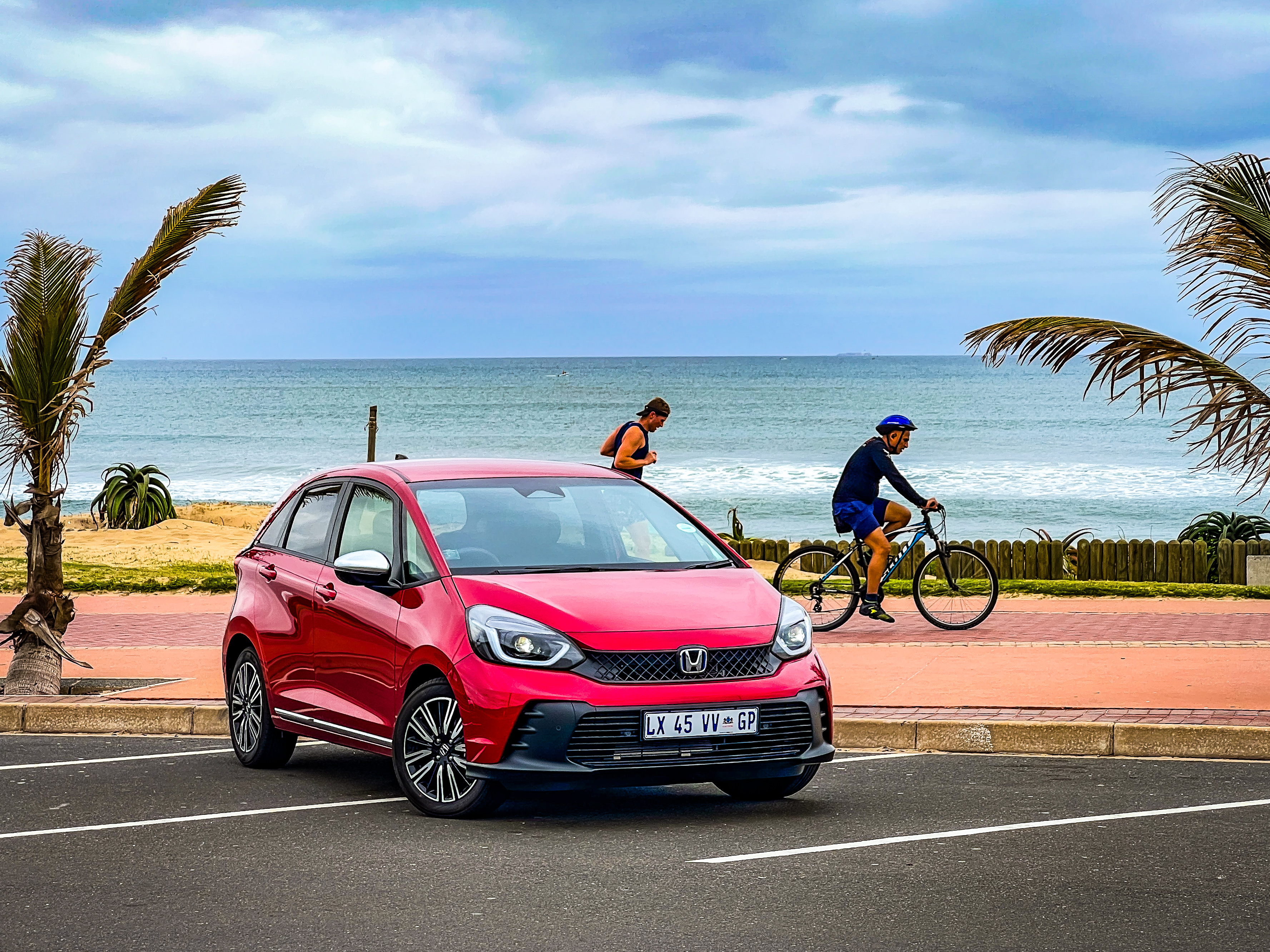
Honda, although a house-hold name around the world and locally often gets overshadowed by it's Japanese counterpart, I mean rightfully so if you take a look at the NAMSA sales stats for the past 20 years. That's not to say Honda isn't good, it's just that they're different, their cars are made for a different target market, while the one aims for large volume of sales, Honda aims more for quality of product which is why their products tend to have a higher price tag than most. Of recent, the brand has undergone some changes in their cars line-up's with an interesting take on the design language, this transcends onto the interior as well with the cabins getting a more premium feel with better quality materials and ergonomic design making it look modern but with a slight retro touch. The FIT, which I drove when launched 2 years ago really impressed me, hence with the Hybrid model was introduced to the market this year, I was itching to get my hands on it to see how it fared against its Japanese cousins who, in my personal opinion have mastered the technology, so here's my take on Honda's car. 


DESIGN

The 2024 Honda Fit Hybrid’s design maintains the Fit’s signature boxy, compact look, maximizing interior space while staying highly maneuverable. The latest model has adopted a more streamlined, modern appearance with updated LED headlights, a refined front grille, and stylish yet subtle lines along the body. The shape is highly functional, designed to reduce drag and enhance fuel efficiency, while details like aerodynamic mirrors and underbody covers also contribute to the model’s low wind resistance. Colors are typically vibrant yet restrained, with options like Opal White, Lunar Silver, Platinum White, Rose Gold and the colour which I had on test, Crystal Red. 


PERFORMANCE

The Honda Fit Hybrid features Honda's e:HEV hybrid system, which combines a 1.5-liter DOHC i-VTEC engine with two electric motors. The result is a combined power output of approximately 90Kw and 253 Nm of torque, providing ample power for urban driving and light highway cruising.The Fit Hybrid operates primarily as an electric vehicle at lower speeds, switching to hybrid mode when more power is needed. At high speeds, the petrol engine takes over for maximum efficiency. This smart system allows the Fit Hybrid to achieve impressive fuel economy.  Unlike traditional transmissions, the Fit Hybrid uses an electronic CVT that minimizes fuel consumption and smoothens the driving experience by matching power output to demand without noticeable shifts.In real-world conditions, drivers can expect to average under 5L per 100km depending on driving habits and road conditions, but Honda claiming 3.7L per 100km which I think is achievable on urban runs. I did take this on a long distance journey thinking I'd get close to 800km on the 40L tank but I think a combination of aggressive driving and not ideal road conditions made me miss this mark by about 120km. The range did seem to drastically drop since showing 100km of range left, so not sure if it's just Honda's way of being extra cautious or it was really dropping that way, either way I had to do some driving on range 0km before making it to a fuel station to fill up. 


COMFORT

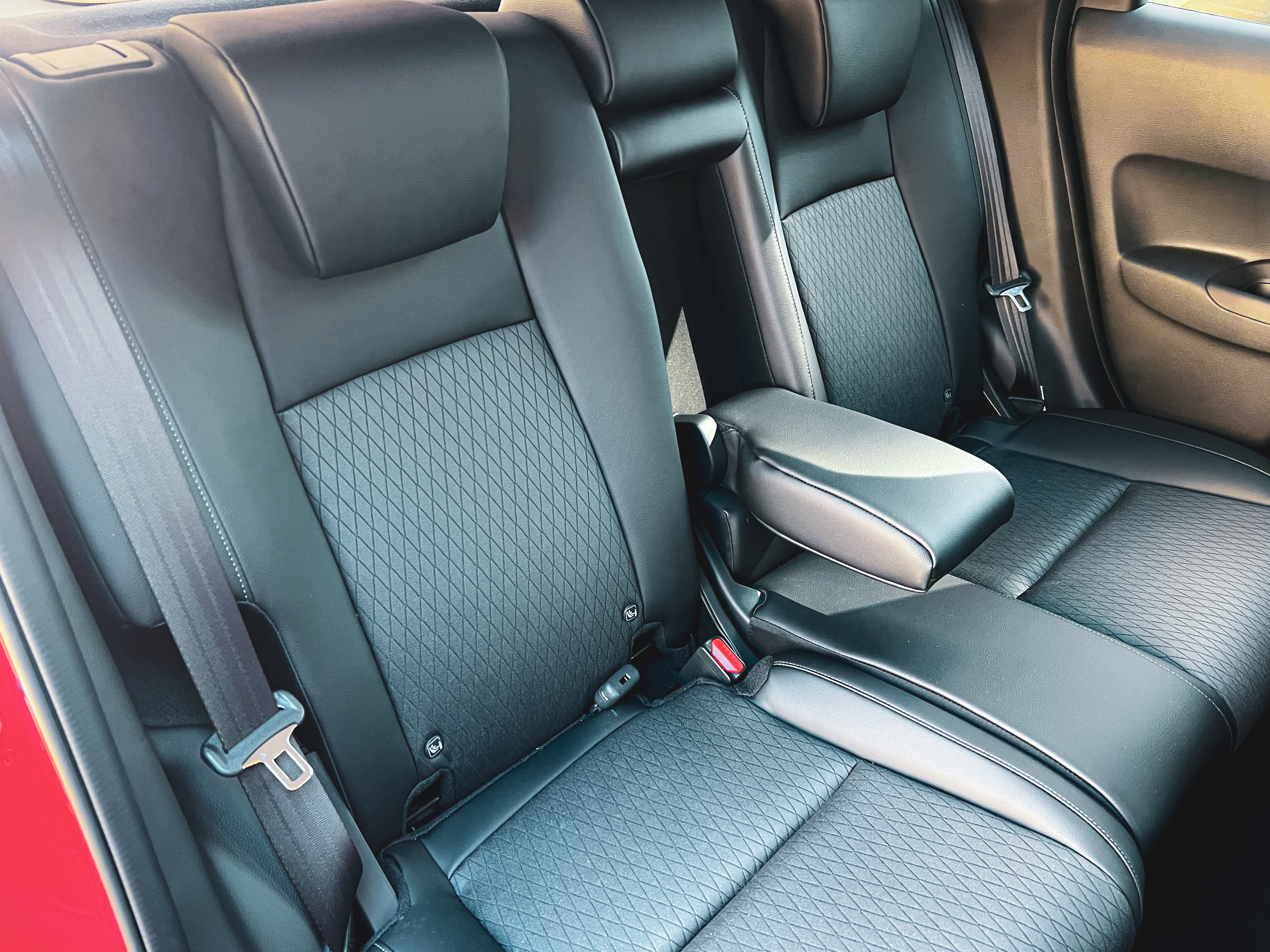
Honda has maximized the interior space with the Fit Hybrid’s Magic Seat system, allowing for flexible configurations. The seats can be arranged in Utility Mode, Tall Mode, Long Mode, and Refresh Mode, enabling storage for larger items or creating extra passenger space as needed. As mentioned earlier, the quality of materials has definitely gotten an upgrade, soft-touch materials and well-padded seats offer comfort for long drives. The seats themselves are ergonomic, providing good support, and the available leather trim enhances the premium feel. The Fit’s tall roofline provides excellent headroom for both front and rear passengers, while legroom is ample given the car’s compact size. Cargo space is substantial, with 470 liters available with the seats up, and up to 1,145 liters when the rear seats are folded.Honda equips the Fit Hybrid with modern tech, even at entry-level trims. Features like an infotainment system with a 7-inch touchscreen standard, offering smartphone integration via Apple CarPlay and Android Auto. All models feature Bluetooth, USB ports, and an auxiliary input. Honda's app integration and touchscreen interface are user-friendly, it also has wireless charging. On the highway, the Fit Hybrid is stable and composed, though the engine can be noisy when pushed hard. However, it handles road imperfections well, with suspension tuned for a balanced ride. The overall experience is smooth, efficient, and comfortable for both short commutes and longer trip 


VERDICT

The Honda Fit Hybrid is a practical, versatile, and highly efficient hatchback ideal for drivers seeking a fuel-efficient, low-emission vehicle without compromising on space and flexibility. It’s particularly well-suited for city dwellers who appreciate compact cars with advanced safety features and versatile interiors. While it may lack the acceleration of some rivals, its balanced ride, ease of use, and standout fuel economy make it a solid choice for daily commuting and light family use. The price point of this car is one that stands out, for what you're paying, it's Japanese competitor offers bigger and cheaper alternatives in their hybrid range, while in the Honda you are getting more features in-terms of tech and safety, I'm not sure if it would be enough to persuade the buyer who is more worried about his pocket than nice to haves. 


 SPECIFICATIONS

Engine
1.5L i-MMD Hybrid
Gear Box
eCVT Automatic
Torque
253Nm
Power
90kW 
Fuel Consumption        
3.7L per 100km
Price
R544,900


Thursday, August 15, 2024

Bucket Seat: Suzuki Jimny 5-Door


The Suzuki Jimny 5-Door is an exciting expansion of the popular Jimny series, which has gained a cult following for its compact size, off-road capabilities, and distinctive retro styling and that attractive price tag. The 5-Door version retains the rugged charm of the 3-Door model but adds practicality with increased interior space, making it a more versatile option for families and those who need extra room. I had the chance to spend a week with the Jimny 5-door to see if its more than just extra doors and space.


 DESIGN

The Suzuki Jimny 5-Door carries forward the iconic boxy design, with its flat surfaces, upright windshield, and round headlights, reminiscent of classic off-roaders. The extended body maintains the Jimny’s tough, go-anywhere appearance while offering easier access to the rear seats and more cargo space. Despite the added length, the Jimny 5-Door remains compact and maneuverable, which is a significant advantage in urban environments and narrow trails. The design is quite an attractive one with many akining it to the popular Mercedes-Benz G-Wagon but on a smaller scale. Tuners globally have come up with some creative kits for the Jimny which transform its design too look like miniature versions of other popular bigger off roaders but for me, the standard look is good enough and there are so many aftermarket accessories to pimp it up, the options are endless!


PERFORMANCE

The Suzuki Jimny 5-Door retains the same off-road prowess as its smaller sibling. It’s equipped with a ladder-frame chassis, solid axles at both ends, and a part-time four-wheel-drive system with a low-range transfer gear, making it capable of tackling challenging terrains. The compact dimensions and short overhangs allow it to navigate tight trails and steep inclines with ease.Under the hood, the Jimny 5-Door is typically powered by a 1.5-liter naturally aspirated petrol engine, producing around 100 horsepower. This engine is mated to either a 5-speed manual with an option of an automatic as well. While not particularly fast on highways, the engine is adequate for both city driving and off-road adventures. The Jimny's light weight contributes to its agility off-road, but on-road, it can feel a bit bouncy and less refined than more road-focused SUVs.Given its small size and engine, the Jimny 5-Door offers decent fuel efficiency, particularly in city driving where its compact dimensions and light weight are beneficial. However, fuel consumption can increase during off-road use or at higher speeds on highways as I found out when doing long distance travel with it. 


COMFORT

Inside, the 5-Door Jimny offers a utilitarian yet functional interior. The materials are durable and easy to clean, reflecting the vehicle’s off-road nature. The additional rear doors make accessing the back seats more convenient, and the increased cabin space offers better comfort for passengers. However, while it is roomier than the 3-Door version, it’s still relatively compact, and taller passengers might find the rear seating somewhat tight on long journeys. The cargo space benefits from the extended body, making it more practical for carrying luggage or gear. The rear seats can be folded down to further expand the cargo area, although the space is still modest compared to larger SUVs. While the materials used are pretty durable, it's not the most comfortable car for long distance travels, the boxy design makes for lots of wind noise, the road noise in the cabin is pretty loud and the cheap stereo doesn't help drown all of this out, so its pretty prevalent when driving. The Jimny 5-Door is not packed with high-tech features, but it includes a larger touchscreen infotainment unit than the 3-door and has wireless mobile phone connectivity. 


VERDICT

The Suzuki Jimny 5-Door is a niche vehicle that excels in what it is designed for: rugged off-road capability in a compact, affordable package. It’s perfect for adventurers, off-road enthusiasts, or anyone who appreciates a vehicle with character and charm. The added practicality of the 5-Door model makes it a more versatile option for daily use, though it still maintains the quirks and limitations of the Jimny lineage. The Suzuki Jimny 5-Door is priced competitively, offering great value for those seeking an affordable, capable off-road vehicle. Its charm lies in its simplicity, off-road capability, and unique style, which is hard to find at this price point. However, those looking for more comfort, space, and advanced features might need to consider other options or larger SUVs.


SPECIFICATIONS

Engine
4 cylinder, 1.5 Petrol
Gear Box
5-speed manual
Torque
130Nm
Power
75kW 
Fuel Economy    
6.4L per 100km
Price
R429,900