Volkswagen has officially introduced the all-new T-Roc in South Africa, and I have to say, this is probably one of the better-looking Volkswagen SUVs to hit the market in recent years.
The second-generation T-Roc gets a completely new design, and while it still looks unmistakably like a Volkswagen, there is something quite different about it. Personally, I really like the way it looks. There are certain elements that remind me of the Volkswagen ID.4, particularly the cleaner front-end design, the lighting signature and the overall proportions. It has a much more modern and sophisticated appearance than the outgoing model.
It is also bigger than before, with the new T-Roc growing by 122mm in length and gaining 28mm in wheelbase. That translates into a more substantial road presence while also creating more room inside. The design is probably the biggest change, though, with the illuminated Volkswagen badge, continuous light strip and sharper rear treatment giving it a much more premium look.
Inside, Volkswagen has also brought the T-Roc up to date with a much more digital cabin. Depending on the model, you get either a 10.3-inch or 12.9-inch infotainment display, a digital cockpit, ambient lighting and Volkswagen's new Drive Experience Dial. The higher-spec R-Line models add features such as IQ.Light LED Matrix headlights, sports comfort seats and additional technology.
There are three models available in South Africa, starting with the T-Roc Life, followed by the sportier R-Line and range-topping R-Line Black Style.
But perhaps the biggest surprise for me is the pricing.
The new T-Roc starts at R599,900 for the 1.4 TSI Life, with the R-Line priced at R689,900 and the R-Line Black Style coming in at R709,900, all including VAT and emissions tax.
What makes this interesting is that the new T-Roc is actually cheaper than the outgoing model, despite being larger, newer and significantly more technologically advanced. That immediately makes it a much more interesting proposition in the highly competitive compact SUV market.
Power comes from a 1.4-litre turbocharged TSI engine producing 110kW and 250Nm, paired with an 8-speed Tiptronic automatic transmission. It isn't trying to be a performance SUV, but the combination should offer a good balance between performance and everyday usability.
Practicality hasn't been forgotten either, with seating for five and a 475-litre boot, making it a fairly sensible option for families and everyday driving.
For me, though, the new T-Roc is all about the combination of design, technology and price. I really like the way Volkswagen has evolved the styling without making it look like just another generic SUV. It has a bit of that ID.4 influence that I think works particularly well, while still retaining the familiar Volkswagen identity.
At R599,900 to start, the new T-Roc also undercuts its predecessor while offering more space, more technology and a completely fresh design. That could make this one of the more interesting Volkswagen launches for the South African market.
The Volkswagen Golf GTI is more than just another hot hatch, especially here in South Africa. Over the years, the GTI has developed an almost cult-like following, becoming a legend on our streets and a car that remains instantly recognisable wherever it goes. With the arrival of the Golf Mk 8.5 GTI, Volkswagen hasn’t tried to reinvent the formula. Instead, it has taken what was already a very capable package and refined it with sharper styling, more power and improved technology.
DESIGN
At first glance, the changes to the Golf Mk 8.5 GTI may appear subtle, but spend some time looking at it and the enhancements become more noticeable. Volkswagen has sharpened up the design, giving the GTI a sleeker and slightly more aggressive appearance while still retaining the familiar Golf silhouette that has made the car so iconic. One of the standout additions is the new set of 19-inch Queenstown alloy wheels, which suit the character of the GTI perfectly. They give the car a more purposeful stance and add a premium edge to the overall design. The updated LED Matrix headlights also contribute to the sharper appearance, while the illuminated Volkswagen emblem at the front is a small but distinctive touch that gives the Mk 8.5 a more modern identity, particularly at night. I’ve always liked the fact that the GTI doesn’t need oversized wings, excessive vents or dramatic styling to make its presence known. The red GTI detailing, sporty bumpers and signature design elements are enough to distinguish it from the regular Golf, while still allowing it to retain that understated sophistication the GTI has always been known for. Overall, the design changes may not be revolutionary, but they work. The Golf Mk 8.5 GTI looks sharper, sleeker and more modern without losing the familiar character that has made the GTI so popular.
PERFORMANCE
This is where the biggest improvement can be felt. Volkswagen has increased the output of the familiar 2.0-litre turbocharged engine to 195 kW, while torque remains at a healthy 370 Nm. On paper, the increase in power may not seem dramatic, but behind the wheel, the Mk 8.5 GTI feels noticeably stronger and more eager to perform. Acceleration is quick and effortless, with plenty of torque available when you need it. Whether pulling away from a traffic light, overtaking on the highway or enjoying a more spirited drive on an open road, the GTI delivers its performance in a way that feels both accessible and usable. That has always been one of the strengths of the GTI: it is fast enough to be exciting without becoming difficult to live with every day. The handling also feels improved. The car feels more planted and grounded, particularly at higher speeds, giving you greater confidence behind the wheel. There is a sense of stability that makes the GTI feel incredibly composed, while still retaining the agility and responsiveness expected from a hot hatch. The steering is precise, the chassis feels well balanced and the car changes direction with confidence. It is equally comfortable cruising on the highway as it is attacking a series of corners. The GTI has always been about finding the balance between performance and everyday usability, and the Mk 8.5 continues to get that formula right.
COMFORT
Performance may be a major reason why people buy a GTI, but the Mk 8.5 also proves that a hot hatch doesn’t have to compromise on comfort. The sports seats provide excellent support and are comfortable enough for longer journeys, with both heating and cooling adding a level of luxury that makes a noticeable difference in everyday driving. In South Africa, especially during our warmer summer months, ventilated seats are certainly a feature that will be appreciated. The cabin has also received an important technology upgrade with a new,12.9-inch infotainment display, much better than the MK8 which screen was smaller than my mobile phone! The system gives the interior a more modern feel and includes wireless Apple CarPlay and Android Auto, making smartphone connectivity simple and convenient. The larger screen is clearer and easier to use, addressing one of the areas where the previous Golf 8 could sometimes feel overly dependent on touch controls. A sunroof is also standard, adding to the premium feel of the cabin and making the interior feel lighter and more spacious. Combined with the quality of the materials, ambient lighting and familiar GTI touches throughout the cabin, it creates an environment that feels sporty without sacrificing refinement. There is also an impressive amount of technology and safety equipment on offer. Modern driver-assistance systems help make daily driving easier and safer, while features such as the LED Matrix lighting improve visibility at night. The GTI manages to combine performance, comfort, connectivity and safety into one very complete package. What I particularly like about the Golf GTI is that it remains a car you can genuinely use every day. It is comfortable in traffic, practical enough for everyday life and refined on longer journeys, but the moment the road opens up, it reminds you that you are driving something special.
VERDICT
In South Africa, the Volkswagen Golf GTI has a reputation that few other cars can match. It has become more than just a performance hatchback; it is part of our motoring culture. From one generation to the next, the GTI has remained a favourite among enthusiasts, and for many South Africans, it is still the ultimate combination of performance, practicality and street presence. The Golf Mk 8.5 GTI doesn’t dramatically change the formula, and it doesn’t need to. Instead, Volkswagen has refined it. The subtle styling enhancements make it look sharper and more modern, the increase to 195 kW gives it stronger performance, the handling feels more composed and the upgraded interior technology makes it a better car to live with every day. There are faster cars and there are certainly more dramatic-looking performance cars, but few manage to combine everything quite as well as the GTI. It can be your comfortable daily driver during the week and still provide plenty of excitement when the opportunity arises. For South Africans who have grown up admiring the GTI, the Mk 8.5 continues the legacy of a nameplate that has become a legend on our streets. It is more powerful, more refined and more technologically advanced, but importantly, it still feels like a GTI. And perhaps that is the greatest compliment you can give it. The Golf Mk 8.5 GTI has evolved, but it hasn’t forgotten what made South Africa fall in love with those three letters in the first place: GTI.
The latest Volkswagen Transporter represents one of the most significant shifts in the history of Volkswagen’s iconic workhorse. For decades, the Transporter has built a loyal following across the world and particularly in South Africa, where it has served everyone from small business owners and fleet operators to large families and shuttle companies. With this new generation, however, Volkswagen has taken a different route by partnering with Ford Motor Company, resulting in a vehicle that shares its underlying platform with the Ford Transit Custom. While that might raise a few eyebrows among long-time fans of the Transporter nameplate, the new model brings with it meaningful improvements in design, performance and practicality. The question for South African buyers is simple: does this new collaboration strengthen the Transporter’s appeal, or does it dilute what made the van so special in the first place?
DESIGN
Visually, the new Transporter manages to retain a distinctly Volkswagen identity despite the shared engineering underneath. The front end is more modern and assertive than before, with slim LED headlights and a broader grille that give the van a more premium and contemporary look. It’s a cleaner design overall, one that aligns well with Volkswagen’s current passenger car lineup while still maintaining the robust stance expected from a commercial vehicle. The new model is also larger in every meaningful dimension. Both the short- and long-wheelbase variants have grown compared to the outgoing version, translating into a more planted appearance on the road. The extra size isn’t just for aesthetics either; it directly improves the van’s practicality. The load area is longer and wider, allowing for greater cargo capacity and easier loading, something that will be particularly appreciated by businesses that rely on the Transporter as a daily workhorse. Inside, the cabin represents one of the biggest leaps forward. The dashboard is now far more modern, dominated by a large infotainment screen paired with a fully digital instrument cluster. The layout feels intuitive and uncluttered, while the materials used give the interior a noticeably more upmarket feel than older Transporters. There’s also a stronger emphasis on storage solutions throughout the cabin, which is an important consideration for drivers who spend long hours behind the wheel.
PERFORMANCE
under the bonnet, the Transporter continues to rely on the proven formula of a 2.0-litre turbodiesel engine, offered in multiple power outputs. These engines are paired with either a six-speed manual transmission or an eight-speed automatic, depending on the variant, giving buyers the flexibility to choose a setup that best suits their needs. Performance in a van like this isn’t about outright speed, but rather about usable torque and efficiency. In that regard, the diesel engines deliver exactly what is required. Power delivery is smooth and predictable, with enough pulling power to move heavy loads without feeling strained. Whether it’s carrying tools to a job site or transporting passengers across long distances, the Transporter feels composed and capable. Towing and payload figures have also improved compared to the previous generation, reinforcing the vehicle’s position as a serious commercial tool. The additional capability will be welcomed by South African businesses that often demand more from their vehicles, particularly in industries where durability and practicality are non-negotiable.
COMFORT
One of the reasons the Transporter has remained so popular over the years is its ability to blur the line between commercial vehicle and passenger car. The latest model continues this tradition by offering a noticeably more comfortable and refined driving experience. The increased dimensions translate into more interior space across the board. For panel van models, that means a larger cargo area capable of carrying more equipment or goods. For Kombi and passenger variants, the extra space makes a significant difference to passenger comfort, particularly on longer journeys. The driving position is excellent, with clear visibility and well-placed controls that make the vehicle easy to live with on a daily basis. Improved seating comfort and better cabin insulation also help reduce fatigue during long hours on the road. In typical Volkswagen fashion, the Transporter also benefits from a wide range of driver assistance features and modern technology, bringing it in line with many contemporary passenger vehicles. For drivers who spend their entire workday in the vehicle, these small improvements make a meaningful difference.
VERDICT
The new Volkswagen Transporter arrives with big expectations, and understandably so. The name carries decades of trust and reliability, particularly in South Africa where the vehicle has long been a favourite among businesses and transport operators alike. What this latest generation demonstrates is that Volkswagen is willing to evolve the formula while still preserving the Transporter’s core strengths. The design is more modern, the cabin more refined, and the practicality even greater than before. Add to that the proven engineering shared with the Ford Transit Custom, and you end up with a van that feels both familiar and forward-thinking. For South African buyers, the Transporter continues to offer a compelling blend of durability, versatility and everyday usability. It may be built on a new foundation, but the essence of what made the Transporter great remains firmly intact. In a market where reliability and practicality matter more than ever, the Transporter once again proves why it has remained a benchmark in the commercial vehicle segment for so many years.
Volkswagen recently launched the 7-seater SUV variant that is based on the new Tiguan, called the Tayron. Previously this model was known as the Tiguan Allspace but the company took the decision to give this model its own name plate, which perhaps makes it more marketable but at the same time gives a clear difference between the Tiguan and the Tayron. It is available in 3 guises, namely standard, Life and R-Line, the kind folk at Volkswagen SA sent through the Life DSG model for me to spend some time with and while some might say its just a Tiguan with extra seats, in this review I'll tell you why that isn't the case with key design differences between this and its smaller sibling.
DESIGN
The Tayron looks like a grown-up Tiguan longer, smoother lines, a broad grille that integrates with slim LED headlights and a distinctly horizontal face that gives it a planted, premium stance. This being the Life model, meant that I didn't get any sporty features to enhance the cars aesthetics but rather a more soft and gentle family car vibe to it. While many might say this is just a bigger Tiguan, there are key design differences to make it different to its smaller sibling, like the elevated engine cover which is more flat and not angled downwards to the front like the Tiguan. Also the lights on the Tayron are more squared off and larger than the Tiguan. The Tayron also features an illuminated VW logo's for both the front and the back of the car with the back looking particularly sweet when glowing in red in the dark. While the overall shape prioritises usable interior length rather than dramatic styling flourishes. From a South African perspective it reads as contemporary and conservative appealing to buyers who want something modern without being flashy.
PERFORMANCE
The Tayron is currently only available in the 1.4 TFSI engine, it uses VW’s 1.395-litre turbo four which is utilized in many of their other models, it produces roughly 110 kW and 250 Nm which for a sizable car like this might seem a bit low but as in the previous model, it proved to be quite sufficient. The 7-speed DSG/dual-clutch gearbox is the standard transmission and pairs well with the engine for smooth, efficient progress. Fuel economy as claimed by VWSA sit around 7.6 L/100 km for the 1.4TSI not hyper-frugal but respectable given the size and the 7-seat packaging. That gives a real world range of about 700+ km on the 55-litre tank in mixed driving handy for South African road trips between major centres. The Tayron is tuned more for composed, comfortable cruising than sporty, body-leaning corner carving. Front-wheel drive 1.4TSI models are the most common local offering — predictable handling, light steering at low speeds for city manoeuvres and composed suspension that soaks up typical suburban and rural South African road surfaces. If you need heavy towing or spirited four-wheel work, the larger 2.0TSI / diesel AWD variants (not the 1.4) are better suited; the 1.4 is aimed at daily family duties.
COMFORT
Interior quality is a clear step up from the old Allspace. Materials feel modern and well-finished VW has applied soft-touch surfaces where they matter, a tidy centre stack and a driver-centric digital cluster on higher trims. Seat comfort front and second row is generous; the wheelbase gives good knee room in row two and the seats can be adjusted to prioritise second-row comfort or boot space. Third row and luggage: the third row is adult-usable for short journeys and fine for children the Tayron’s 7-seat boot is quoted at about 345 litres with all seven up, and folding the third row expands capacity significantly (up to around 850 L in some configurations and much more with the second row folded). That makes the Tayron one of the more adaptable 7-seat SUVs in its class for family-holiday duties and weekend runs.
Other handy design elements include good visibility from higher seating, numerous storage cubbies, USB ports across rows and available heated front seats make it well suited to local conditions and family life. Higher trims add acoustic glazing, panoramic roof options and premium-feel appointments. The Tayron uses Volkswagen’s current touchscreen systems which is a large central display that includes wireless Apple CarPlay/Android Auto, wireless phone charging trays and multiple USB-C ports. The layout is modern and the UI is similar to other new VW models, so it’s familiar to buyers coming from Polo/Tiguan. Driver aids and safety on the Tayron include lane-keeping assist, adaptive cruise control, blind-spot monitoring and a full suite of airbags as standard on local derivatives. Structural safety and active assist features put it on par with rivals important for family buyers prioritising safety on South African highways and urban environments. Depending on the model trim you choose, there is also a host of extras you can select when configuring your car.
VERDICT
The Volkswagen Tayron 1.4 TFSI 7-seater is a convincing successor to the Tiguan Allspace: spacious, well-built and full of relevant technology for modern South African families. The 1.4 TFSI variant is the pragmatic choice — punchy enough for daily driving and long trips, reasonably economical, and well priced for what it offers. If you want a comfortable, safe and versatile family SUV with a strong dealer network and modern tech, the Tayron is worth a test drive. If you regularly tow heavy trailers, need true off-road capability or want the ultimate performance, it's best you wait for the larger 2.0-litre petrol and diesel engines when they become available locally.
From record production volumes to strong export performance, Volkswagen Group Africa’s (VWGA) first year as the Home of Polo has been a year of achievement.
Though VWGA’s Plant Kariega has been building the popular Polo since 1996 and the Polo Vivo since 2010, it has only been the self-proclaimed Home of Polo since 1 July 2024. This was when the plant officially became the sole exporter (for left- and right-hand drive European and Asia-Pacific markets) of the Polo in the Volkswagen Group, sending this hatchback to 38 markets around the world.
In fact, Polos account for 88% of exported vehicles through the Port of Port Elizabeth. Between July 2024 and June 2025, 119 336 Polos have been exported from Kariega to Europe and the Asia-Pacific region. Of these, the biggest receivers of Polos are Germany, France and the United Kingdom. On top of this, the Polo was South Africa’s most exported vehicle in 2024.
During this same 12-month period, the plant celebrated a record production volume. A total of 167 084 vehicles were built in Kariega in 2024, of which 131 485 units were Polos for export, and 35 599 vehicles were Polos and Polo Vivos for the local market. A record-breaking 13 930 Polos were built in October 2024 alone.
The Polo also performed strongly in the local market last year, selling 12 253 units and being named the Top Locally Manufactured Vehicle of the Year at the Naamsa Accelerator Awards in October 2024.
“The Polo is unquestionably an icon, and we are proud to call Plant Kariega its home,” said Ulrich Schwabe, Production Director at VWGA. “Our first year as the sole exporter of the Polo was certainly a strong one, and we plan to build on the foundation of this success continuously and consistently, with the Polo, Vivo and our upcoming third model, the Tengo.”
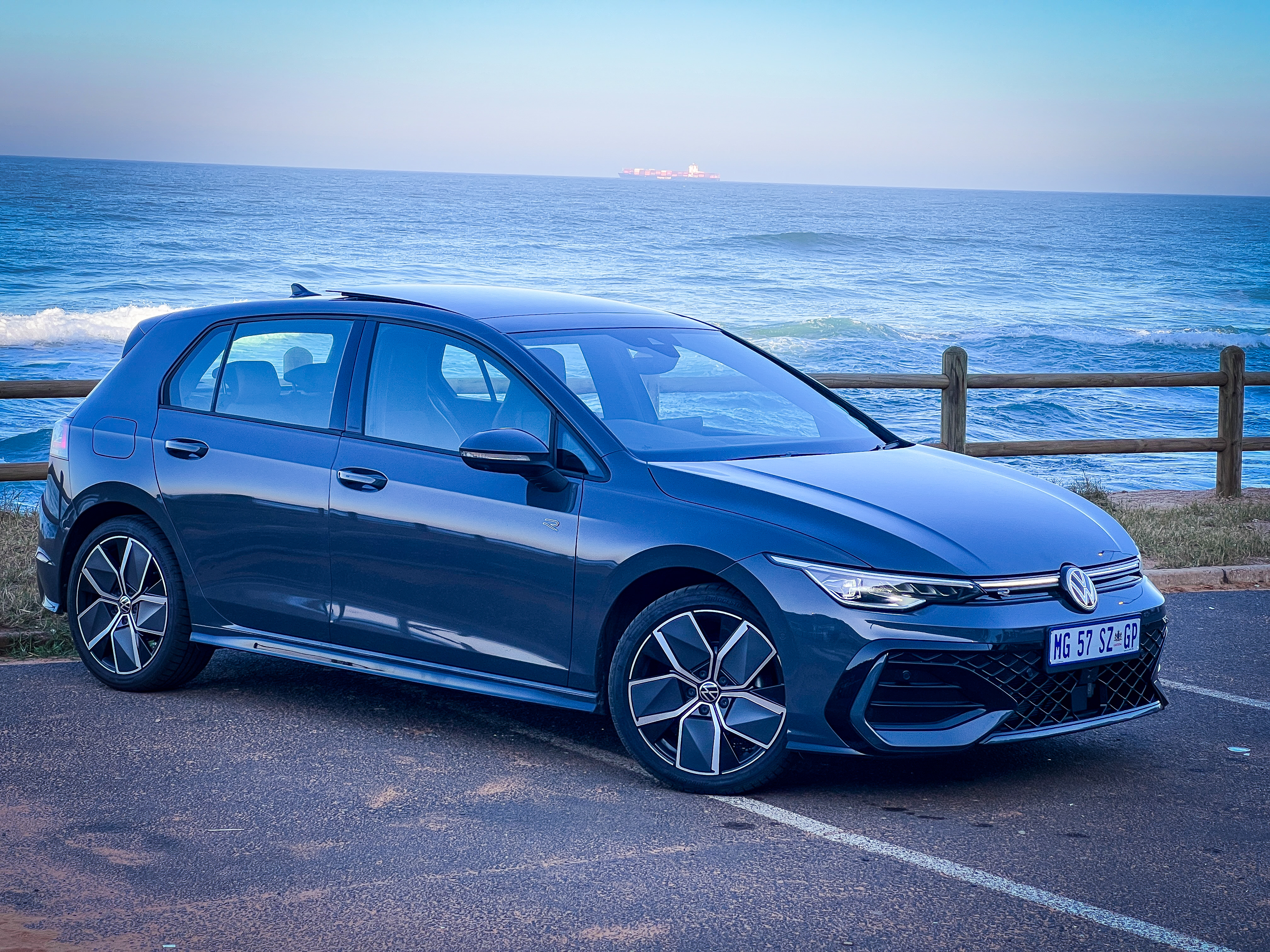
When Volkswagen South Africa made the decision to not bring any of the entry level models of the Golf 8 into the country, it did come as a surprise. The VW Golf has been a cult classic of the hatchback scene dating from the 80's till present time in the country and while the GTI remains the most popular model, the others did have their space in the market. Looking at sales figures of the Golf 7 and 7.5, it was clear that people still loved the range topping models over the smaller engine ones, so it was maybe on that premise that VWSA made the decision, however with the Golf 8 R model only coming after what felt like decades to reach our shores, the Golf 8.5 was already been mentioned across the motoring forums. I was fortunate enough to spend time with both, the Golf 8 GTI and the Golf 8 R, both brilliantly engineered performance cars and really ushered a new era for the Golf brand but with the prices being quite steep on both, the market cried out for the lower end engines. The Golf 8 did have some teething issues, like the introduction of the haptic touch buttons to the steering wheel and the infotainment screen was quite small compared to what was offered by competitors, much of these complaints were flooding the online social platforms and the guys at VW HQ were taking notes, so when they could launch the face-lift 8.5, these could be addressed. Earlier this year VWSA made an announcement at their Kariega plant that the Golf 8.5 TSI would be making our shores in the second quarter of the year, but then they tuned the tables on us with no word on the GTI and R. Anyway, the Golf 8.5 TSI made it's way into my drive way not too long ago and I got to spend a week with it, here's how it went.
DESIGN
The design received some tweaks compared to the Golf 8, and with the R Line kit made the overall package look very sleek. In fact, many thought it was a Golf R as I drove past them, the only giveaway would be the lack of "Vrrpha". The LED headlights have gotten much sleeker and sharpened, on the top of the range IQ Light LED matrix headlights it incorporates a new high-performance main beam with a range of up to 500m. The the front end also looking slimmer than the 8 with the solid light bar that links the two headlights together, the main defining features has to be the Volkswagen logo, which is illuminated for the first time on the Golf. The R-Line kit really brings an aggressive facia up front with a large diffuser and angular air pods on either side of the car. The boldness extends over to the profile of the car with a new range of rims available, this one came fitted with the Leeds alloy rim that has a 5 spoke detail with mixture of black and silver, there is an optional extra upgrade to the York rim but this one looks ace on it. On the inside, much remains the same but the two major talking points see's the return of actual buttons to the steering wheel and the large infotainment screen which I will touch on later in the blog.
PERFORMANCE
This looks every part of a performance hatch back but it has one of the most frugal engines under the hood, VW's 1.4-litre TSI has been one of the best engines made on the market for a number of years now. Especially in cars like the Golf is where it shines the most, producing 110kW and 250Nm of torque, it has some grunt to it off-the-line even though the 0-100km/h time isn't much to write home about at 8.5 seconds, however the car really is a dream to drive. It feels so smooth on the road and effortless on the highways, all this while being efficient on petrol at the same time. In the 7 days with the Golf 8.5 TSI I drove about 1,300km, one trip which was about 840km return, the car managed a respectable 6.3L per 100km, matching that of the brochure, it was the first time I ever managed to get exactly what the OEM said it's average is, in fact I could have gotten lower, but I did quite a bit of over taking of slow trucks and harsh breaking for cattle on the road. I expected a lot in terms of economy from this car but getting close to 900km on a single tank of fuel (50L tank) was not what I was expecting. Colour me impressed!
COMFORT
The Golf 8.5 has all the creature comforts that you would normally expect in a German car, the high-gloss black finishes are nice to look at but do attract dust particles like crazy. The large infotainment screen which measures in at 10.3-inches won't be getting any "tiny" comments from me. The high-definition screen with VW's user friendly UI is easy to use and setting up your mobile apps has never been easier, you can just plug your device in via the USB C port and it will instantly pick up what OS you're running and prompt you on your device if you'd like to cast to the screen and whether you'd like a wired or wireless connection. There is a wireless phone charging tray as well as a secondary USB C charging port for the passenger. While the haptic buttons have disappeared from the steering wheel, they still remain there for the climate control which can get annoying when driving and trying to adjust the fan speed and its also present for the optional extra panoramic sunroof. The back seats are pretty comfy and have a decent amount of legroom with their own vent for aircon. The boot space is generous for a hatchback and features the biscuit spare wheel.
VERDICT
Overall this car is a gem, one that truly lives up to the hype and performs exceptionally in every aspect of what a car should be. VW have done a stunning job on the styling and really flys the Golf name badge high. While I understand VW's first stance on not bringing any lower end models of the Golf 8 to SA, seeing how good this car is and the price its coming in at, it makes me wonder if they did bring the 1.4 TSI models, how much more they would have sold. Even the base price of the R-Line+ kit seems pretty attractive to me, and you know you're getting a name you can trust in the motor industry.
Following its premiere in February 2025 at the Volkswagen Indaba in Kariega, the new Volkswagen Golf is now available for sale.
The Volkswagen Golf has a rich history in South Africa, dating back to its 1978 launch with the Mk1 (first generation), which quickly gained acclaim for reliability and performance. Locally assembled at the Volkswagen production plant in Kariega, it became affordable and popular with the South African customers. Its success continued with the launch of the second generation model in 1984, praised for improved quality followed by the third generation in 1993 and fourth generation in 1999, with the latter becoming a top seller in the local market.
The fifth and sixth generation models were introduced with class leading technology and safety, while the seventh generation, launched in 2013, brought further refinement. The Golf’s enduring appeal lies in its blend of quality, performance and design style.
The eight generation model continues this legacy, cementing the Golf as a key model for Volkswagen in South Africa. When the new Golf was launched in South Africa in 2021, it was not offered with the venerable and efficient 1.4 TSI engine variant. However with the introduction of the updated model, the 1.4 TSI engine, producing 110kW has made a return to the lineup to mark the return of the icon.
The new Golf impresses with a next-generation infotainment system, a more intuitive operating concept, a sharper front and rear end design as well as efficient drive systems.
Revamped front and rear and new light design. The new Golf can be recognised by its new front end. Visually defining features include the Volkswagen logo, which is illuminated for the first time on the Golf, and the newly designed LED headlights. The top-of-the-range IQ.LIGHT LED matrix headlights incorporate a new high-performance main beam with a range of up to 500 m.
The new Golf is available in the Life, Life Plus, R-Line and R-Line Plus equipment lines.
The Golf Life, a perfect blend of style and technology. It features Eco LED headlights for better visibility and efficiency. Stay connected with Wireless App Connect and a Cruise Control System. Inside, it features a 10.3-inch Infotainment Radio, 6-speaker audio system, 10-colour Ambient Lighting Dashboard and 10-inch Integrated Digital Cockpit. The Life derivative comes standard with 16-inch Norfolk alloy wheels.
In addition to the Life standard equipment, the Life Plus derivative features Driver Profile Selection, rear view camera, 30 colour ambient lighting and Art-velours sports comfort seats package.
The R-Line derivative features R-Line seat trim covers with head rest integrated into the seat for a sporty look, body covered bumpers in R-Line style including 17-inch Coventry alloy wheels complimented with LED plus headlamps, Park Assist with Park Distance Control, Progressive steering with sports suspension, Climatronic 3-zone automatic climate control with allergen filter and controls in the rear, keyless entry, Multi-Function heated steering wheel with shifting paddles.
In addition to the R-Line standard features, the R-Line Plus is offered with IQ Matrix LED Headlights with illuminated VW front logo, power adjustable driver seat, active high beam, heated and cooling front seats, Vienna leather seats with R-Line logo in front, padels in brushed stainless steel and 18-inch Leeds alloy wheels.
The new Golf 1.4TSI with 110kW engine is mated to a 8-speed tiptronic transmission. The engine develops maximum torque of 250 Nm available between 1500 – 4000 rpm. The Golf delivers a fuel-efficient 6.3l/100km and accelerates from 0–100 km/h in just 8.5 seconds.
As part of the launch activities, Volkswagen will host a National Dealer Day through our dealer network where customers will get an opportunity to test drive the new entry T-Cross, Tiguan 2.0 TDI and 2.0 TSI in addtion to the Golf 1.4 TSI models.
The Volkswagen Golf comes standard with a 3-year / 120 000 km warranty, 5-year 90 000 km service plan, and a 12-year anti-corrosion warranty. The service interval is 15 000 km.
Over the December period I got to spend it with the new Volkswagen Tiguan. The third generation of the popular mid-sized family SUV was launched in the country last September but since then not many were to be seen on the roads, well at least here in Durban which has a strong VW presence. I couldn't help wonder why, given its good looks, modern interior, technology packed and great list of safety features, what could have been deterring prospective buyers from buying this car? The previous generation was a firm favourite in the segment, so much so they even brought the performance version Tiguan R which was in high demand. Now many of you must be already saying, "it's because of the price", but Volkswagen SA have done extremely well with the pricing, keeping it relatively equal to the outgoing model, so it definitely couldn't have been that. I was hoping that by spending a month with it, I could nail down the reason, so here's my thoughts that and more importantly, the car itself.
From the day it rolled into my driveway, I was grinning like a child, the Tiguan is a gorgeous looking car but the one that was handed to me, came in the R-Line package in Persimmon Red Metallic paint. It was a looker, with its curvaceous body, sporty lines, mesmerize lights and menacing stance it made sure to get attention wherever I went. The styling, especially on the R Line really gives the overall body a great look, the main focus being the large front grille which almost looks like a mouth open sucking in all the air as you drive. The solid panel grille above that which spans around the front joining the headlamps with the VW emblem in the center. The comments I got about the looks during my time with it were all positive, while it was a modern design its core still remained true to the VW design language. There was nothing extreme to deviate it away from the classic SUV look, unlike what we're seeing coming out of China and that is what the loyal VW customers expect from their brand, something that fits the mold of a family SUV but with that added German robustness.
While the outside drew a lot of attention, its the inside where I spent my time and let me tell you, it was quite a place to be. A fresh new take on an interior from VW with elements borrowed from other newer models like the Golf 8.5 and the Touareg. The first thing that gets your attention is the large infotainment screen, measuring in at 12.9-inch its the main focal point of the cabin. It feels like its floating on the dash and this illusion gets better at night with the ambient lighting which has 30-colours to choose from with a bi-colour display, so the combinations you can play around with really can make your imagination go wild. The instrument cluster is a 10-inch digital cockpit that has the usual VW displays which can be configured and changed from the multi-function steering wheel. I'm really please VW has gone back to conventional buttons here, and not the haptic type that we all loathed on the Golf 8 GTI..... however, they could have designed new buttons and not just lift them up from the previous Tiguan. The steering wheel is nice, being leather wrapped give its that premium feel with perforations where your palms should sit when holding it. While VW have gone back to conventional buttons for the steering wheel, they still chose to keep some haptic sensitive buttons for the volume, climate control and sunroof. The volume can be controlled from the steering wheel so no issues from me thee, however, adjusting the climate control proved to be an annoying task while driving, you require some level of attention to what you're doing which distracts you from the road, same goes for the sunroof wen wanting it in the tilt position, sliding gestures to open and close are fine but trying to get your finger hit dead center to tilt seemed like mission impossible at times.
Other cool tech that came in the Tiguan was the wireless mobile phone connectivity, which is pretty much the norm in any new Volkswagen, the cabin is very minimalist, so there isn't much to play around with apart from the infotainment screen however, VW have added a jog shuttle control which serves a dual purpose, in normal setting its a volume knob, yes, that makes it three ways to control the volume and much better than that haptic sensor thing below the screen and when you push it in, it allows you to select the various driving modes offered. The Tiguan has 4 USB C charging ports, 2 up front that is covered by a flip tray which has the wireless charging mat below and 2 additional USB C ports for the rear passengers. The interior as mentioned is simple but well laid out, my one gripe would be the extensive use of plastics, I realise this might be a mixture of cost cutting and weight saving but especially with the long solid pieces, they tend to creek when driving in hot weather. What I did love is how the ambient lighting is integrated into the dash panels with a matrix like pattern that lights up at night and really adds another element to the interior experience. This model also came with a large panoramic glass sunroof which during summer to have open will give you a nice roast, so I tend to only have the curtain open at night.
Lets talk about the power under the hood, at launch the Tiguan was only launched in the 1.4L TSI Petrol engine, now there is the 2.0L TSI Petrol and 2.0L TDI motors on offer, so my holiday wheels was the 1.4L TSI and while many did ask "Isn't it under powered?", truth be told, for 90% of my driving, it was just fine. On highways when you need that extra oomf it found itself searching for power but with the 7-speed DSG there to optimally change gears, the lack of power was there for just a few seconds. The great thing about the DSG is the way helps the motor get the best from each gear, not over straining the engine and this plays a major role in keeping that fuel economy down. Within the 30 days, I filled five full tanks of fuel, averaging about 52L every time, and I did just over 4000km with it, so giving me about 800km on every time I filled up. That's not bad from a 55L tank with a "small engine that can't cope".
My long distance trip with it to Johannesburg would be the ultimate test for the Tiguan , apart from seeing how the engine coped with the load, it was also a way to test the luggage capacity as it would be up against my mum! Many don't know this but people in Johannesburg don't get anything there, so my mother feels it is her duty to buy everything in Durban to take up for her sisters and my siblings, completely forgetting that we need to carry clothes as well. My plans of carrying my golf clubs with were dashed when I saw the 4 cooler boxes lined up in the passage to be loaded before we hit the road but with 3 luggage bags, an assortment of boxes and the cooler boxes packed in, the automatic tailgate closed without a fuss and it was time to hit the road. Seeing that it was just the three of us traveling, my mother felt that the unused seats in the back also deserved to be filled, so there was more things added to that. With a load, driving up country to higher altitude, the Tiguan felt at ease, with the construction and trucks in KZN, it was difficult to set the cruise control so I waited till we passed halfway to test it out. With all the functions on the steering wheel it was easy to set a speed and with the adaptive technology, also set a following distance to the car in front of you and I let it do the work. While it is a cool feature, it works well when the other drivers on the road know how to drive, I had loads of people cut in front of me which then kicks in the breaking since the minimum distance has been exceed so there were times the car would slow down right to 60kph to maintain that gap but that is no fault of the cars, it's just rather annoying to have that break in momentum.
The comfort of the drive was rather special, the ride quality was smooth with the shocks coping well with the various surfaces it traversed on. The climate control managed the temperature in the cabin but like I said, I had to close the curtain on the sun roof as the sun got quite strong over the Free State. After halfway I thought it would be the best time to test the massaging seats out, to stimulate the blood flow, with the various options of massages and the choice of intensity, this optional extra was becoming my favourite of the car. Applying just the right amount of pressure making your back and shoulders relaxed after a good few hours of driving. Not too relaxing as you don't want to be falling asleep at the wheel now, also it has a time limit so the most you can do is 30 minutes at a time. Overall the trip to and from Joburg with the Tiguan was a great success with all the passengers happy and all the goods delivered safely, on the journey up I averaged 7.2L per 100km and on the way down this dropped to 6.5L per 100km, so pretty efficient if you ask me.
While in Durban, I tend to get up to lots of things, from going to the beach for a run, to playing golf with mates and taking long drives for special lunches and dinners. For this, the Tiguan proved to be a worthy companion as well, rocking up to one of Durban's prestigious golf clubs in the striking looking SUV, it sure did turn some heads, what was even better is that I managed to fit the entire four ball in the car, all four bags and 4 players with ease, no dropping of the seats or anyone sitting cramped up. To say that is impressive is being unkind to the Tiguan, it had many other spectators at the golf club equally impressed. So, again, that luggage compartment of 652L cant pack a lot! With the torque derived from that TSI motor, the car can pull the load too.
Overall my 30 days with the Tiguan was faultless to say the least, while there were niggles that I picked up with the quality of certain materials and the slight lag of power on highway driving, I don't see that as major contributors to the low sales. I personally think it is the general consumer thinking that the 1.4L TSI engine is inadequate for their requirements so they were waiting for the 2.0L options to come out. While this may get more sales, the major issue VW and most of the other European brands are facing is competition from the East. The Chinese have infiltrated the market tenfolds with new brands coming in every week it seems, with each one offering more for less than the other. While these cars do offer a lot for a small price tag, it still is very early to tell if they will be worth it in the long run. With trusted names like VW, you still have peace of mind knowing you have a solid German vehilce, and the loyalist will agree but when push comes to shove, if you can be saving yourself an extra R6,000 a on a car installment, the answer is a no brainer for many. It's a pity though because Volkswagen have a great third generator of their much loved SUV, I doubt it will see the sales high as the previous generation but it should be able to take a stake in the market.